


ARE THERE RISKS TO NATIONAL DIGITAL TRANSFORMATION FROM DEPENDENCE ON FOREIGN CHIPS?
- News
- 11/12/2025
On the afternoon of August 22, 2025, in Hanoi, the scientific conference “Ensuring Security and Technological Autonomy in Vietnam’s Chip Production in the National Digital Transformation Process”, opened a frank dialogue about the risks to national security from using foreign chips, amid an increasingly heated global race in semiconductors.
The conference was organized by Vietnam National University, Hanoi (VNU) and CT Group, with the participation of senior leaders, scientists, and security experts from the Ministry of Public Security, the Ministry of National Defense, and the Ministry of Industry and Trade.
The global technology landscape is hotter than ever with headlines such as “U.S. attaches tracking devices to shipments of AI chips,” “China removes all Western chips from a massive hydropower plant over security concerns,” and, most recently, China questioning Nvidia (U.S.) over potential “backdoors” in its H20 AI chips. The U.S. has banned the use of Chinese-made chips in equipment serving the military, while Australia has prohibited mobile network components from a Chinese company in Australian government infrastructure.
The world is also facing a new cybersecurity threat: a form of ransomware operating at the CPU level, capable of hiding deep within hardware and evading most traditional security solutions.
Vietnam today is undergoing digital transformation at an unprecedented pace, having completed the first axis – citizen digitalization – and now moving into the second axis – organizational digitalization. The third axis, which is also the final stage, is the digital transformation of low-altitude, multi-layered spaces, encompassing the entire infrastructure from underground, on the ground, to nature, rivers, mountains, and cities. This is also referred to as location digitalization, environmental digitalization, or the national Digital Twin. At this stage, the volume of data and the number of hardware devices involved will grow exponentially compared to the previous two axes. However, Vietnam is currently relying entirely on foreign chips, and this dependence on external chip supply carries unpredictable risks.
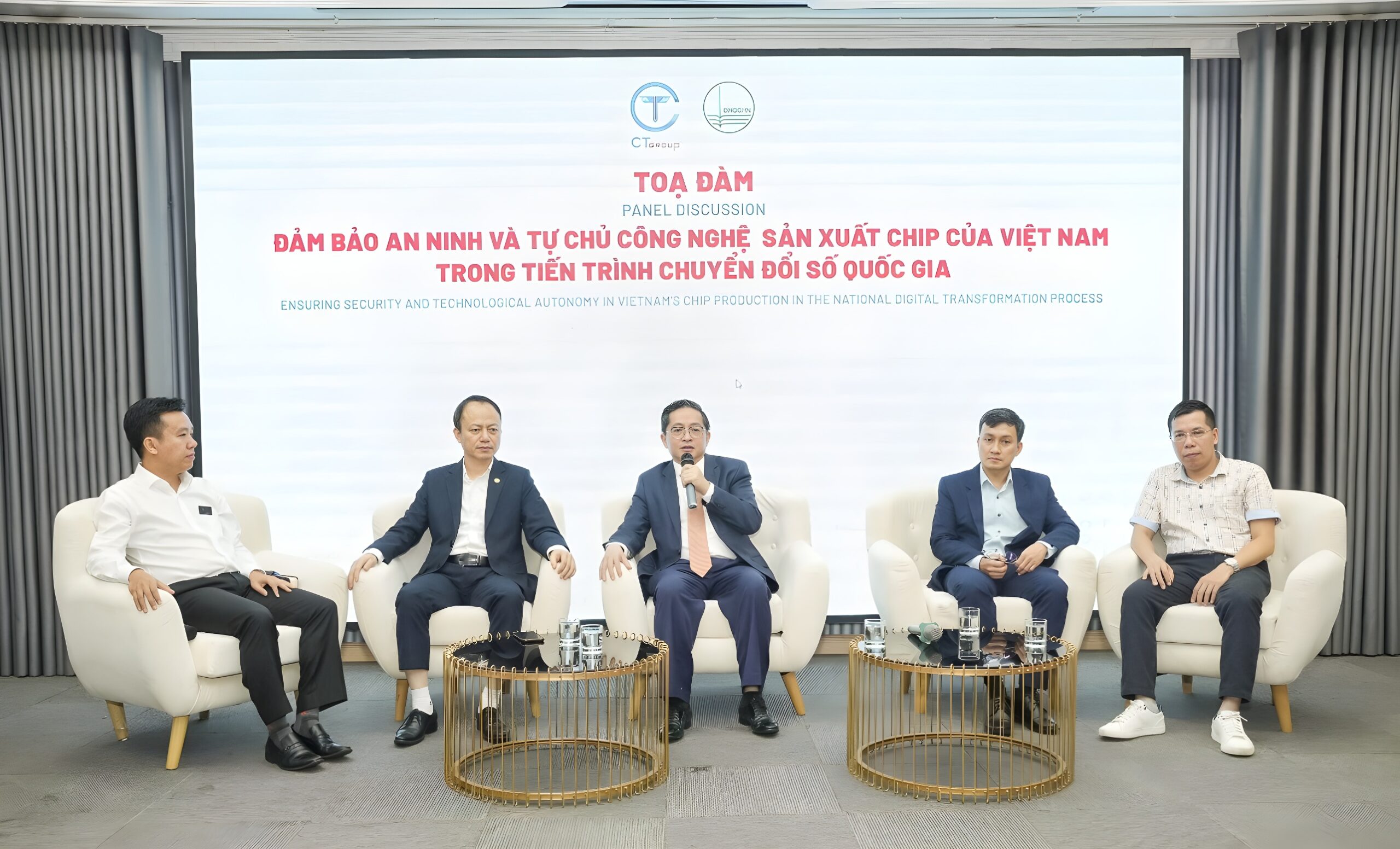
Colonel, Dr. Le Hai Trieu – Director of the Institute of Professional Electronic Engineering, Department of Security Industry, Ministry of Public Security – stated: “We need to identify and analyze the risks to national security. First, in terms of hardware security: Trojan/Backdoor at the circuit or logic level, hidden and conditionally triggered, are very difficult to detect through standard functional testing. Firmware controlled by suppliers poses risks of remote control features, kill-switches, or region-locks. Consequences include covert intrusion, device disablement during crises, and loss of control over trusted boot chains. Next, supply chain and geopolitical risks: dependence on foreign foundries and outsourced assembly and testing (OSAT), or vulnerabilities from natural disasters, conflicts, and export sanctions, may result in supply disruptions, higher costs/delays, and risks of ‘manipulation’ at the final stages. There is also the issue of technological lock-in and dependence on standards: reliance on core ISAs/IPs (x86/ARM, PHY, DDR/PCIe PHY, SerDes) and EDA tools, or proprietary software stacks – drivers, toolchains – reduces flexibility for national defense and critical infrastructure, leading to loss of autonomy in technical roadmaps. If counterfeit or refurbished components infiltrate the supply chain, incomplete testing, early failures, or SEU/EMI not properly evaluated to industry standards (aviation, automotive, power systems) may cause operational incidents and functional safety failures. Finally, in terms of encryption and security standards: if cryptographic modules do not meet FIPS 140-3/Common Criteria, or if side-channel attacks (power/EM) are not sufficiently hardened, the consequences could be decryption, eavesdropping, and privilege escalation.”
Therefore, Vietnam must adopt a higher vision – mastering core technologies from design, production, to commercialization of semiconductors; creating “Make in Vietnam” products that serve both civilian and defense needs while competing fairly in the global market. Above all, it is essential to build a strong and independent semiconductor industry, laying the foundation for a technologically sovereign nation that controls its own destiny. Only then can Vietnam truly become the new semiconductor hub of Southeast Asia, serving its own needs while also supplying the world.
“We have successfully developed sensor chips, memory chips…” shared Assoc. Prof. Dr. Nguyen Tran Thuat, Director of the Institute of Semiconductors and Advanced Materials, VNU.
Prof. Dr. Le Quan, President of VNU, stated: “Vietnam National University, Hanoi, has been implementing the ‘three-party cooperation’ model from a very early stage. VNU also carries an important mission as a center of science and technology. And we need corporations like CT Group.”
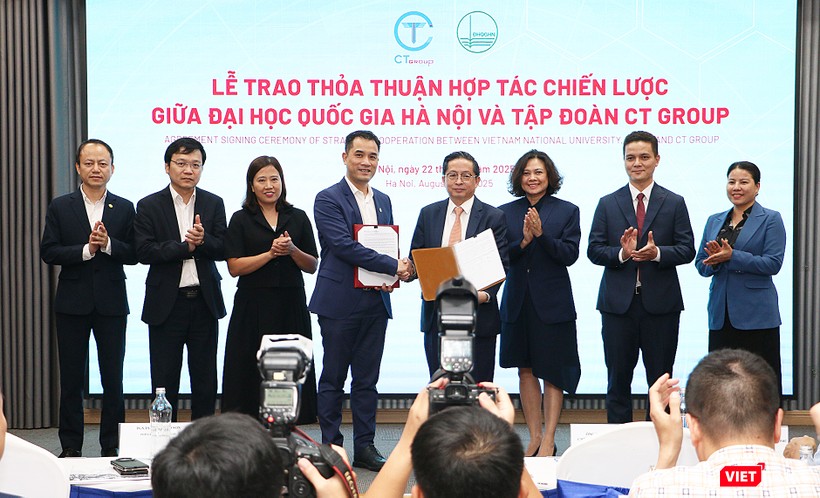
Resolution 57 clearly set out the task: to establish mechanisms that encourage public procurement of products and goods derived from domestic scientific research. This strategic orientation has been institutionalized in the Law on Science, Technology and Innovation 2025, particularly in Articles 16 and 27. Article 27 explicitly stipulates that the State must act as the first customer of scientific and technological products developed by domestic organizations. To realize Resolution 57 and these provisions, it is necessary to form a strategic alliance among the State – the University – and the Enterprise, known as the “three-party cooperation” model, to create a synergistic force for national innovation.
At present, CT Group is the only entity in Vietnam capable of carrying out the entire process: from advanced chip design, photolithography processing in Taiwan, to bringing the wafers back to Vietnam for cutting, assembly, packaging, testing, and producing a complete “Make in Vietnam” chip. “In our view, the first type of chip that needs to be developed is one that serves phases two and three of digital transformation. Specifically, chips that convert data from analog to digital (ADC), along with other IoT chip lines. Secondly, the MCU chip, which is the microcontroller unit. Thirdly, the SAI chip (AI at the edge). In addition, telecommunications and remote sensing chips – namely frequency chips – are also essential,” shared Mr. Tran Kim Chung, Chairman of CT Group.
The CT Group representative also presented two important proposals. First, to request that the Ministry of Public Security and the Ministry of National Defense clearly identify the essential chip lines that need to be developed domestically. CT Group, together with VNU, Hanoi stands ready to conduct research, design, fabrication, assembly, and testing to produce complete chips. Second, to propose collaboration among VNU, Hanoi, the Ministry of Public Security, and the Ministry of National Defense to establish a chip testing laboratory. At the same time, the three parties would jointly develop a specific type of chip – namely SIM chips for unmanned aerial vehicles – to support registration and fee collection.

34 YEARS OF SELF-RELIANCE AND RESILIENCE OF CT GROUP
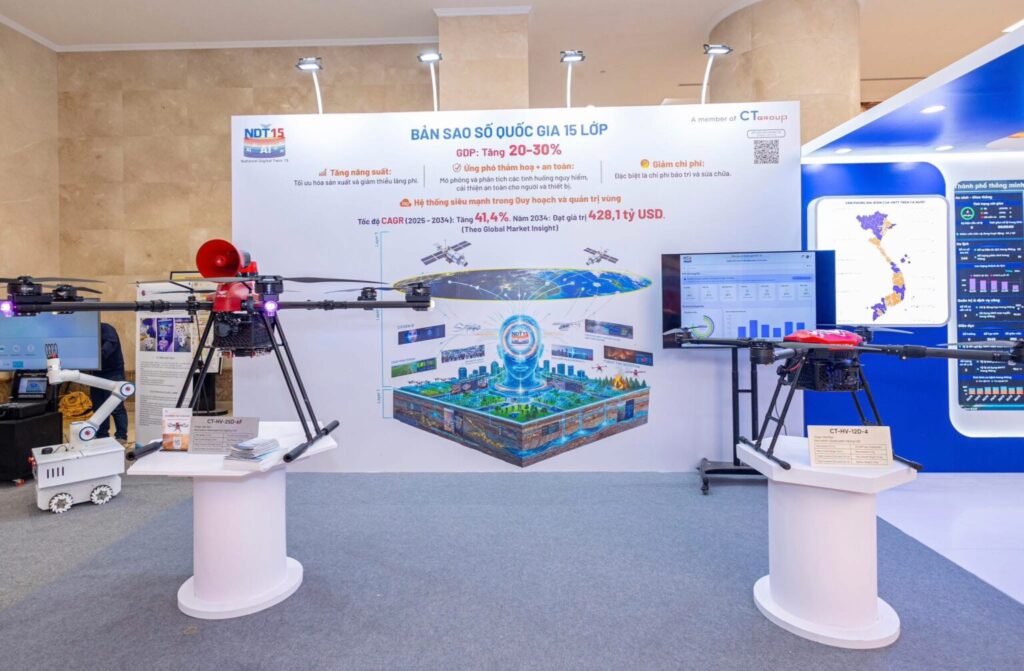
HIGHLIGHTS OF NDT 15 AND CT UAV’S TECHNOLOGY BOOTH AT THE THIRD NATIONAL FORUM ON DIGITAL ECONOMY AND SOCIETY DEVELOPMENT
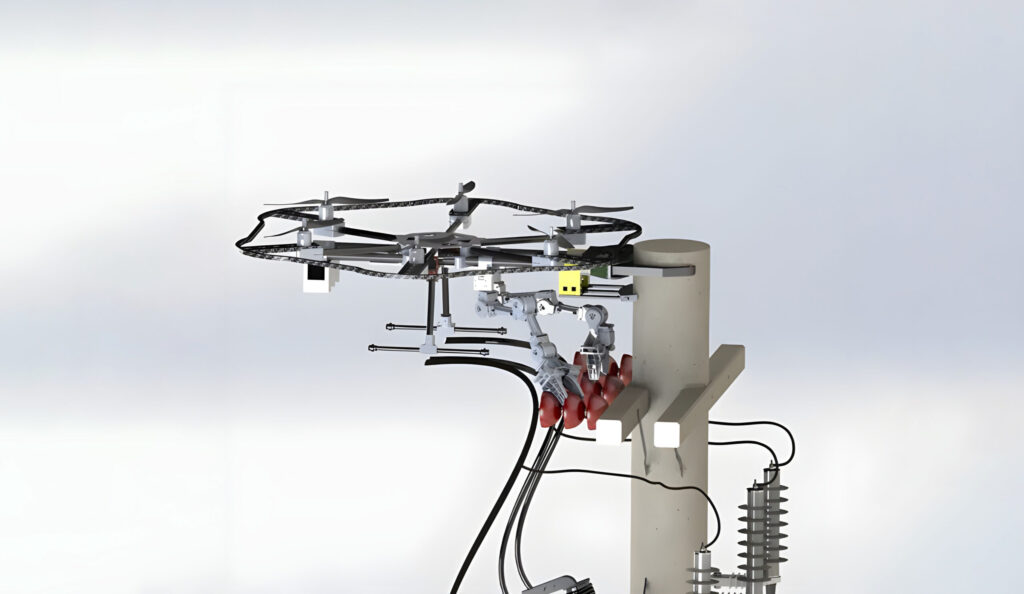
THE FOUNDATION OF FUNDAMENTAL SCIENCE “GERMINATES” NEW TECHNOLOGIES
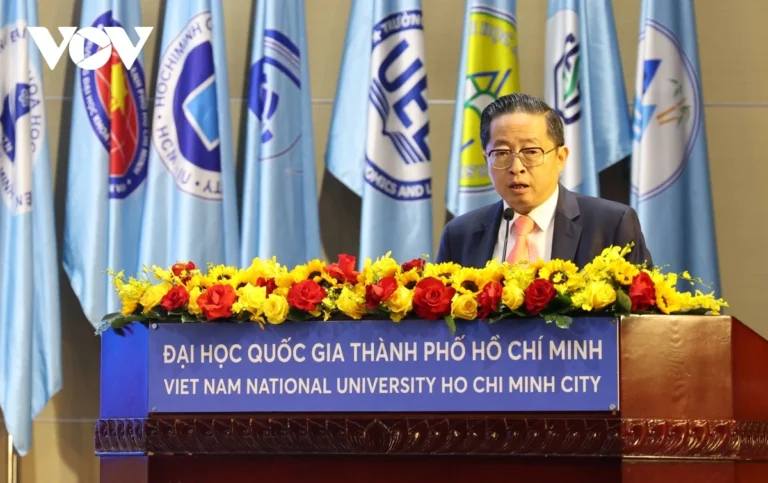
ENTERPRISE PROPOSES DEPLOYING VIETNAM’S FIRST QUANTUM COMPUTER FOR THE BIOTECHNOLOGY SECTOR

NATIONAL SCIENTIFIC CONFERENCE ON “BIOTECHNOLOGY DEVELOPMENT STRATEGY 2026–2030, VISION TO 2045”
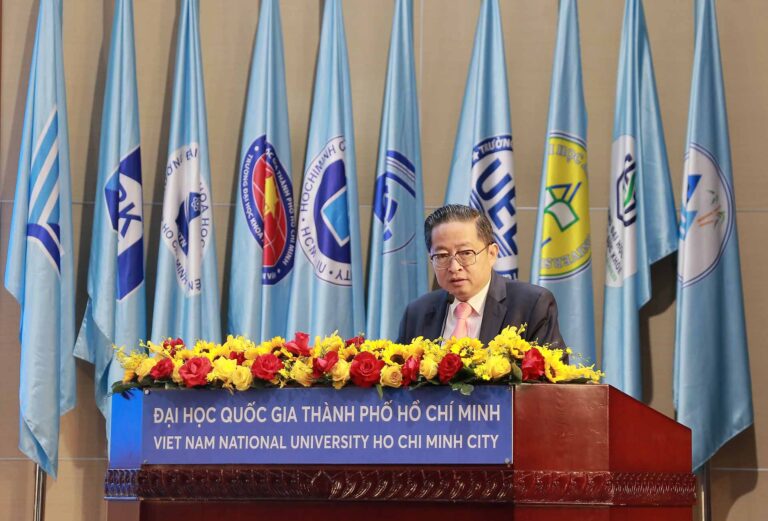
A SANDBOX IS NEEDED FOR VIETNAM’S BIOTECHNOLOGY SECTOR TO UNLOCK A BILLION-DOLLAR MARKET